How Long Do Roasted Coffee Beans Last?
You bought a bag of fresh-roasted specialty coffee. You're not going to drink it all this week. So how long do you actually have before it goes stale — and what can you do to slow that process down?
Here's the honest answer, based on what actually happens to coffee after it's roasted.
The Short Version
Roasted coffee beans are at peak quality for about 2–4 weeks after the roast date. They remain drinkable — just declining — for up to 6–8 weeks. After that, the coffee isn't dangerous to drink, but it tastes noticeably flat and stale.
Ground coffee stales much faster: within 1–2 weeks of grinding (and within minutes in terms of losing the most volatile aromatics).
The exact timeline depends on the roast level, how the coffee is stored, and — most importantly — how fresh it was when you got it.
What "Going Stale" Actually Means
Coffee doesn't spoil the way meat or dairy does. You won't get sick from drinking old coffee. What happens instead is a gradual process of oxidation and off-gassing that slowly strips the coffee of its interesting flavors.
Here's what's happening inside the bag:
CO₂ off-gassing: Right after roasting, coffee beans are full of CO₂ produced during the roasting process. This gas slowly escapes over days and weeks. While some CO₂ is needed for proper extraction (it helps create crema in espresso and contributes to bloom in pour over), the rapid off-gassing phase winds down after about 2 weeks.
Oxidation: Once coffee interacts with oxygen, the oils and aromatics start to break down. The bright, volatile flavor compounds that make a fresh coffee smell amazing — the florals, the fruit, the sweetness — oxidize relatively quickly. What remains is the more stable, generic roasty character.
Moisture absorption: Coffee is hygroscopic — it absorbs moisture from the air, which accelerates staling and can introduce musty flavors if the environment is humid.
A Realistic Freshness Timeline
Days 1–3: Coffee is too gassy to brew well. Wait for the bloom to settle (a few days for filter coffee, up to a week for espresso).
Days 4–14: Peak. The CO₂ has settled to a productive level, oxidation hasn't taken hold yet. This is when the coffee tastes best — most vibrant, most complex, most interesting.
Days 15–30: Good but declining. You'll still make an excellent cup. The most delicate flavors — florals, bright fruit — start to fade. Caramel and chocolate notes hold longer. Everyday drinking quality is still high.
Days 31–60: Noticeably stale. The coffee tastes flat compared to its peak. Still drinkable, and with enough milk and sugar most people won't complain. But you're leaving the interesting stuff behind.
60+ days: Stale. This is grocery store coffee territory — the roasty bitterness remains but the nuance is gone. Use it for cold brew (which is more forgiving) or compost it and start fresh.
Roast Level and Freshness
Roast level affects how quickly coffee stales:
Light roasts are denser and have more intact cell structure. They off-gas more slowly and hold their flavor longer — often staying excellent for 3–4 weeks and drinkable for 6–8 weeks. If you want to maximize the shelf life of a particular bag, buy lighter roasts.
Dark roasts are more porous from the extended roasting. The oils are already on the surface. They off-gas faster and oxidize faster — typically peaking around 1 week and starting to taste noticeably flat by weeks 2–3. If you drink dark roast, buy it in smaller quantities more frequently.
Medium roasts fall in between, usually peaking around days 7–14 and staying good through about 4 weeks.
How to Store Coffee to Maximize Freshness
Four enemies of fresh coffee: oxygen, light, heat, and moisture. Your storage goal is to minimize exposure to all four.
Keep it in an opaque, airtight container. If your coffee comes in a bag with a resealable zipper and a one-way degassing valve, the bag itself is your best container — squeeze out excess air and reseal after each use. If the bag doesn't reseal well, transfer to an airtight ceramic or metal container. Avoid clear glass or clear plastic containers that let in light.
Store at room temperature. A cool, dark cabinet away from the stove is ideal. Avoid anywhere that gets warm — heat accelerates oxidation.
Don't refrigerate. The fridge introduces two problems: moisture and odor absorption. Coffee is extremely good at picking up smells from its surroundings. Your coffee will start tasting like whatever else is in your fridge. The fridge also causes condensation on the beans when you take them in and out, which accelerates staling.
Freezing: only for long-term storage. If you have coffee you genuinely won't be able to drink for more than a month, freezing in an airtight container (ideally vacuum-sealed) can preserve it reasonably well. The rules: freeze once, thaw once, don't put it back in the freezer. Repeated freeze-thaw cycles cause moisture damage and flavor loss.
Don't grind until you're ready to brew. Ground coffee stales dramatically faster than whole beans because you've exponentially increased the surface area exposed to oxygen. Grind right before brewing whenever possible.
The Practical Takeaway
Buy coffee more often in smaller quantities. A 12 oz bag consumed in 10–14 days is always better than a 2 lb bag you're working through over 6 weeks. If you can, set up a subscription with a roaster who ships fresh — that way you never have to think about running out, and you always have coffee at peak freshness.
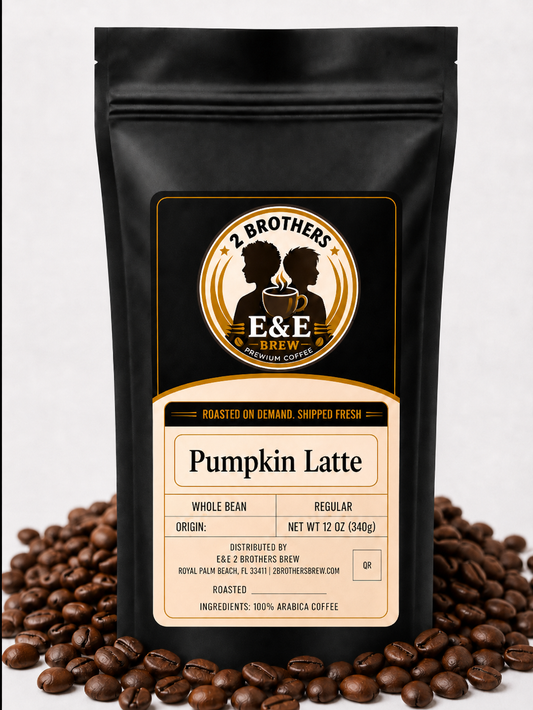
At E&E 2 Brothers Brew, coffee is roasted to order. Every bag ships within days of roasting, so you get the full peak-freshness window — not coffee that's already been aging in a warehouse.