Best Coffee for French Press: What to Look For
French press is one of the oldest and most beloved coffee brewing methods in the world, and for good reason. It's simple, requires no paper filters, produces a rich and full-bodied cup, and is almost impossible to break (literally — though many people do manage it). It's also one of the most forgiving brew methods for beginners.
But the coffee you put in it matters. Here's what to look for when choosing coffee for your French press.
Why French Press Is Different
Most brew methods use a paper filter that removes the coffee's oils and fine particles before they reach your cup. French press uses a metal mesh screen instead, which means those oils and micro-fines pass right through into your drink.
This is what gives French press coffee its distinctive character: a heavier, richer body, a certain "weight" in the mouth, and a flavor that feels more complete and less clean than pour over or drip. Some people love it. Some find it too heavy. If you love it, this guide is for you.
The Ideal Roast Level for French Press
French press works well with medium to medium-dark roasts. Here's why:
The oils and compounds that pass through the metal filter tend to add richness and body — which is great for coffees that have those qualities to begin with. Medium roasts bring caramel sweetness, nuttiness, and a balanced body that shines in French press. Medium-dark roasts bring dark chocolate, more intensity, and a satisfying weight.
Light roasts can work in French press, but they're better suited to pour over and filter methods where clarity is the goal. The full-immersion extraction of French press can sometimes make light roasts taste a bit muddy or astringent — you lose the delicate clarity that makes light roasts special.
Very dark roasts are also fine in French press if that's what you like, but watch out for over-extraction — dark roasts pushed too hard can turn bitter and ashy.
Origin: What Works Best in French Press
Almost any single origin or blend can work well in French press, but some origins particularly shine:
Colombia is probably the best all-around choice for French press. Colombian coffees tend to have a clean, balanced sweetness, medium body, and caramel or stone-fruit notes that translate beautifully into a full-immersion brew. They're approachable without being boring.
Guatemala offers a rich, chocolatey body that suits French press perfectly. Guatemalan coffees often have a satisfying depth that feels complete and substantial in the cup — exactly what you want from the brew method.
Brazil is a classic French press choice for people who like a nutty, low-acid, full-bodied cup. Brazilian natural-processed coffees have a slightly funky, sweet complexity that plays well with the method.
Sumatra is beloved by French press fans who want something earthy, heavy, and bold. Sumatran coffees have an unusual processing method that creates a distinctive musty earthiness — not for everyone, but if it's for you, French press is the method.
Processing Method: Natural vs. Washed
Processing method (how the coffee cherry is removed from the bean) has a meaningful effect on how a coffee tastes in French press:
Natural-processed coffees (where the bean is dried inside the whole cherry) tend to be fruitier, sweeter, and more full-bodied. They're excellent in French press, where their richness has room to shine.
Washed coffees (where the cherry is removed before drying) tend to be cleaner and brighter. They can work well in French press but are at their best in filter methods where clarity comes through.
For French press, a natural or honey-processed coffee at medium roast is often the best combination.
Grind Size: This Is Critical
For French press, you want a coarse grind — roughly the texture of coarse sea salt or rough breadcrumbs. Coarser than you'd use for pour over, definitely coarser than espresso.
Why coarse? Two reasons. First, French press uses a long steep time (typically 4 minutes) — finely ground coffee would over-extract and turn bitter in that time. Second, fine grinds pass through the metal mesh filter and settle at the bottom of your cup as sludge. A coarse grind minimizes that.
If you're using a blade grinder, pulse it in short bursts and aim for uneven, chunky pieces rather than a fine powder. A burr grinder gives you much more consistent coarse grind and makes a noticeable difference in the cup.
A Simple French Press Recipe
This recipe makes about 32 oz (a standard 8-cup French press) and takes about 5 minutes including steep time.
What you need: 55 grams of coarsely ground coffee (roughly 8 tablespoons), 880 grams (roughly 30 oz) of hot water just off the boil, and a timer.
Step 1: Pre-warm your French press by rinsing it with hot water. Discard the water.
Step 2: Add your coarsely ground coffee to the empty press.
Step 3: Pour all your hot water over the grounds, making sure all the coffee is saturated. Give it a gentle stir.
Step 4: Place the lid on (plunger pulled all the way up) and set a timer for 4 minutes.
Step 5: When the timer goes off, press the plunger down slowly and steadily. Don't force it.
Step 6: Pour immediately. Don't let brewed coffee sit in the French press — it continues extracting and will turn bitter.
Adjust from there: if it's too strong, use less coffee or a coarser grind. If it's too weak, use more coffee or a slightly finer grind.
One Last Thing: Buy Fresh
French press is slightly more forgiving of coffee age than pour over, because the heavy body and full-immersion extraction can mask some of the flatness of stale coffee. But fresh coffee still makes a dramatically better cup. The difference between 1-week-old and 6-week-old coffee is unmistakable even in a French press.
Buy fresh, grind coarse, steep 4 minutes. That's really all there is to it.
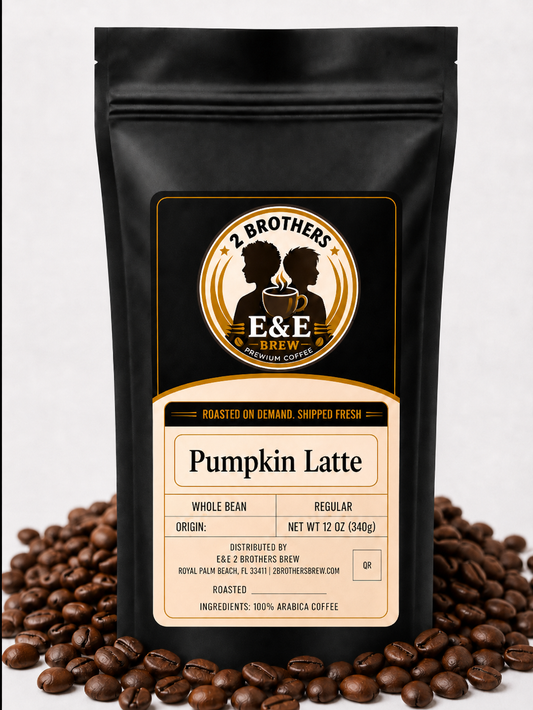
Find the perfect French press coffee at E&E 2 Brothers Brew →